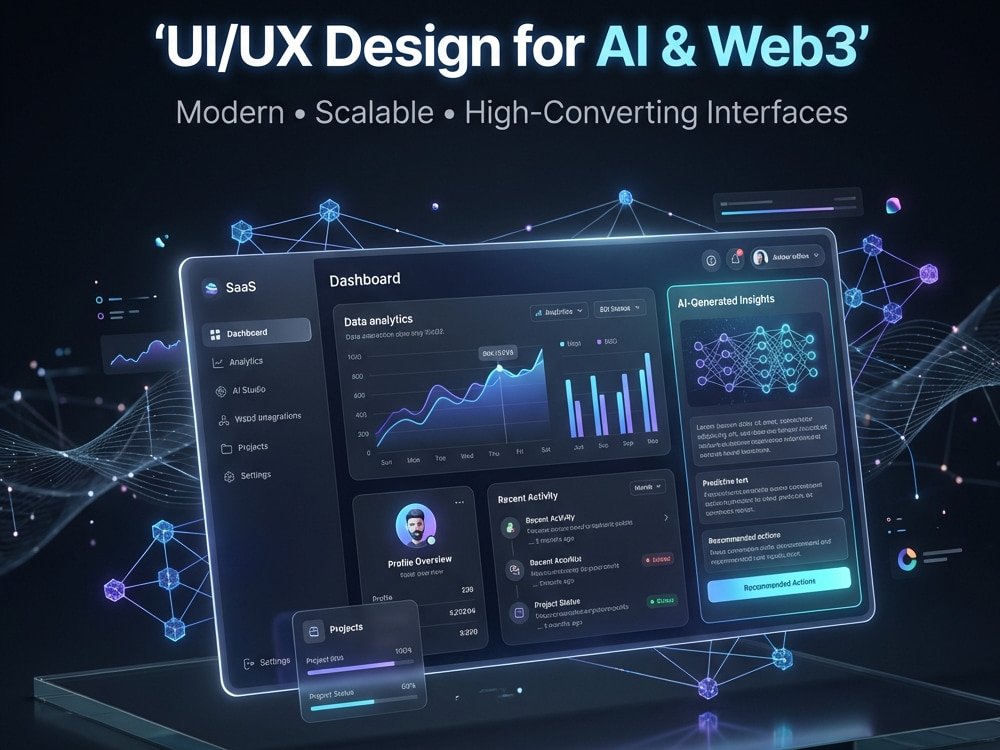

The best design is invisible. Not in the sense of being bland or forgettable, but in the sense that users move through it effortlessly, without friction, without confusion, without having to think about the interface itself. That quality — invisible clarity — is what separates interfaces that convert from those that frustrate.
The Interface Is the Product Now
In most digital products, the interface isn't a wrapper around the product. It is the product. The value your software delivers is inseparable from how users experience accessing that value. A powerful feature behind a confusing interface might as well not exist.
At NxerAi, we see this play out clearly in conversion data: the same product with a redesigned user flow regularly delivers 25–40% improvement in activation and retention metrics.
Top UI/UX Trends Shaping 2026
Adaptive Personalization
Adaptive personalization means the interface itself responds to individual user behavior, not just the content within it. Navigation that reorders based on what a particular user actually uses. Dashboards that surface the metrics relevant to this user's role and history.
Multimodal Experiences
Multimodal experiences combine text, voice, gesture, and image input in the same interface. This isn't science fiction; it's shipping in leading consumer and enterprise applications today.
Agentic UI Patterns
Agentic UI represents the frontier of interaction design. Rather than presenting users with forms and menus, agentic interfaces accept goals expressed in natural language and handle the complexity of execution autonomously.
Intentional Minimalism
Counterintuitively, as interfaces become more capable, the best ones are becoming more restrained. Features that aren't needed in the current context are hidden. Decisions that can be automated are automated.
Interfaces designed with human-centered AI principles tend to show 31% higher task completion rates and 28% lower support contact rates compared to traditional UI approaches.
Designing with Ambient AI
Ambient AI refers to intelligence that operates in the background, improving the experience without demanding attention. It's autocomplete that actually understands context. It's form fields that pre-populate from document uploads. It's error messages that diagnose the actual problem and suggest the fix.
Conversion Is the Real Design Metric
Beautiful design that doesn't convert is a portfolio piece, not a business asset. The practices that consistently move these numbers are friction mapping, progressive disclosure, and trust signal placement.
The Human-Centered Process That Works
- User research before wireframes. We talk to actual users before designing anything.
- Prototype testing with real users at low fidelity. A Figma prototype that costs two hours to build is a far better investment than discovering a navigation problem three weeks into engineering.
- Measurement-driven iteration post-launch. Design doesn't stop at handoff.